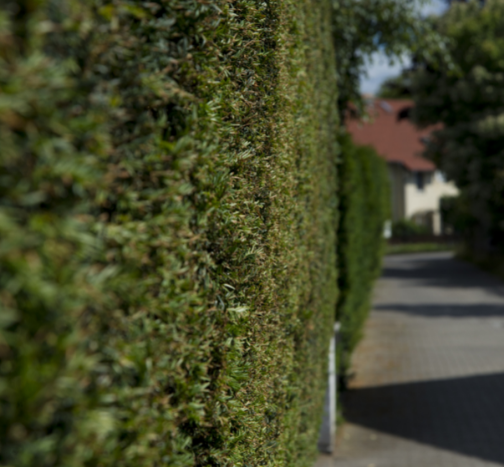
Hedges provide privacy, define boundaries and add structure to gardens, but they need regular maintenance to remain healthy and manageable. As a hedge grows, its branches and foliage can become increasingly crowded, restricting light and airflow and making it harder to maintain an even shape.
For homeowners in Sevenoaks, Kent, recognising when a hedge has become too dense can help prevent excessive growth from affecting its appearance, surrounding plants and overall condition. Understanding the warning signs also helps you determine when routine trimming may be sufficient and when professional hedge maintenance is more appropriate.
What Are the Signs That a Hedge Has Become Too Dense?
A dense hedge is not necessarily unhealthy. Many species naturally develop thick foliage, which is useful for privacy and screening. However, when growth becomes excessive or poorly distributed, it can create problems that are difficult to resolve through occasional trimming alone.
1. Light Struggles to Reach the Inner Branches
One of the clearest signs of excessive hedge density is a thick outer layer of foliage that prevents light from reaching the centre and lower branches.
Over time, shaded inner growth may weaken, while the outer foliage continues to grow vigorously. Some hedges may develop bare patches inside or lose leaves and smaller branches near the base.
Careful pruning can help manage the distribution of growth, although the appropriate approach depends on the species and its ability to regenerate from older wood.
2. The Hedge Develops a Thick, Woody Interior
As a hedge matures, its branches naturally become thicker. However, years of repeated trimming without suitable thinning can create a congested network of woody growth.
This can make the hedge increasingly difficult to maintain and may prevent light from reaching areas where new growth is needed. It can also leave the hedge with a dense outer shell and a sparse interior.
Professional hedge maintenance can help identify which branches should be removed or shortened to improve the structure without unnecessarily damaging the plant.
3. Airflow Through the Hedge Is Restricted
When branches and leaves become tightly packed, air movement through the hedge can be reduced. In persistently damp conditions, poor airflow may contribute to foliage remaining wet for longer, potentially encouraging certain fungal diseases.
If leaves frequently appear discoloured, develop unusual spotting or begin to die back in crowded areas, the hedge may benefit from closer inspection.
These symptoms can have several causes, so thinning should not be treated as an automatic solution. Assessing the plant’s condition first helps determine whether pruning, improved maintenance or another intervention is needed.
4. The Hedge Is Becoming Difficult to Shape
A hedge that grows beyond its intended dimensions can become increasingly difficult to manage. The sides may bulge, the top may become uneven, and vigorous shoots may extend over paths, driveways or neighbouring garden areas.
Repeatedly cutting only the outermost growth may encourage a thick surface layer without addressing congestion further inside.
A suitable pruning approach helps restore a manageable shape while taking account of the hedge species, its growth pattern and the amount of material that can safely be removed.
5. Lower Growth Is Becoming Sparse
A hedge that is thick at the top but thin near the ground may be receiving insufficient light at its base. This is particularly noticeable when the upper branches spread outwards and shade the lower foliage.
Where appropriate for the species, maintaining a slightly wider base than the top can help sunlight reach the lower branches. This supports a more even appearance and may reduce the risk of the hedge becoming bare near ground level.
However, established bare sections will not always recover through trimming alone. The hedge’s age, species and existing condition all influence how well it responds to corrective pruning.
What Happens If an Overgrown Hedge Is Left Untreated?
Excessive density can make a hedge harder to maintain and may gradually affect its structure and appearance. Congested growth can also hide dead or damaged branches, making it more difficult to spot problems during routine checks.
As the hedge expands, it may encroach on paths, reduce access to garden areas or shade nearby plants. Heavy growth can also make future pruning more challenging, particularly when the hedge has become tall or contains substantial woody branches.
Addressing these issues early helps keep maintenance manageable and reduces the likelihood of needing extensive corrective work later.
How Can a Dense Hedge Be Managed Properly?
The right approach depends on the hedge species, its age, its condition and the extent of the congestion. Light trimming may be enough to maintain a hedge that is only slightly overgrown, while a heavily congested hedge may require selective thinning or staged pruning.
Not all species respond well to cutting into old wood, so removing large amounts of growth at once can leave some hedges permanently damaged or slow to recover.
A professional tree surgeon can assess the hedge and recommend an appropriate maintenance plan. This is particularly useful for mature, tall or heavily overgrown hedges where access and the removal of substantial branches require additional care.
When Should You Arrange Professional Hedge Maintenance?
Consider arranging a professional assessment if your hedge has developed bare patches, contains substantial woody growth, repeatedly becomes difficult to shape or has grown beyond a manageable height and width.
Regular maintenance can help preserve the hedge’s structure, encourage suitable growth and prevent it from becoming excessively congested. The timing and extent of pruning should be adapted to the species and its seasonal growth patterns.
Conclusion
A hedge may have become too dense when light cannot reach its inner growth, branches are heavily congested, airflow is restricted or the lower foliage begins to thin. Recognising these signs early makes it easier to maintain a healthy, attractive hedge without resorting to unnecessary heavy pruning.
If your hedge has become overgrown or difficult to manage, Sevenoaks Tree Surgeons can assess its condition and recommend suitable hedge maintenance for your property in Sevenoaks, Kent. Contact us to discuss your requirements and arrange professional assistance in keeping your hedges healthy and well maintained.
Call us on: 01732 443299
Click here to find out more about Sevenoaks Tree Surgeons
Click here to complete our contact form and see how we can help with your trees needs.