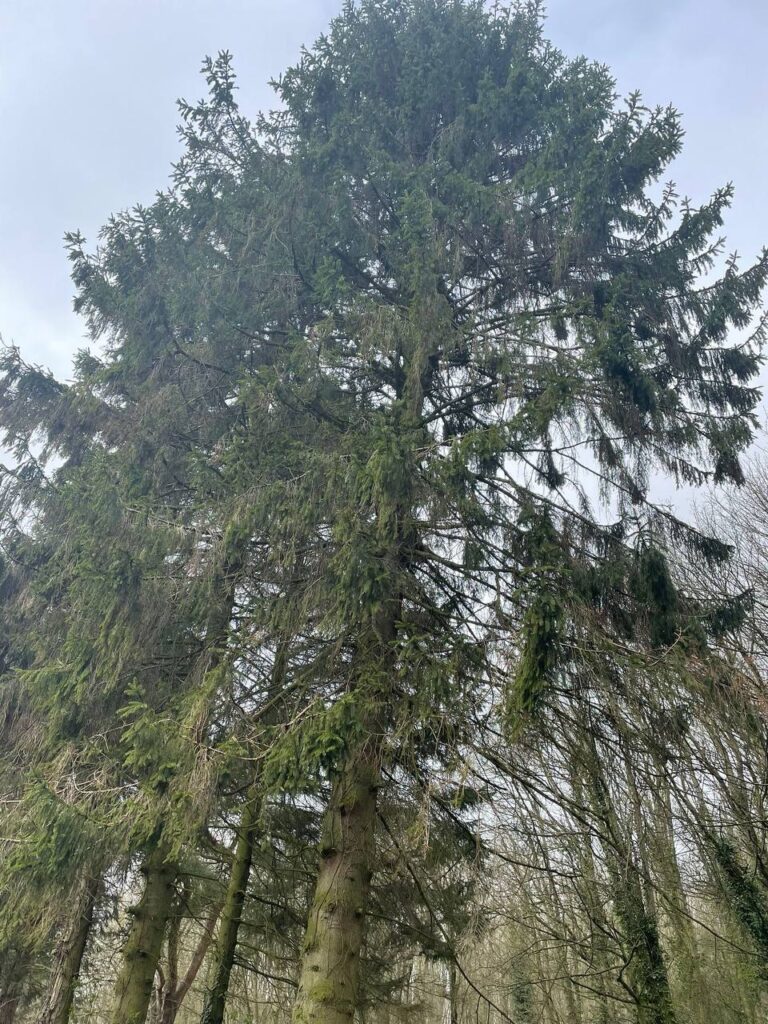
Mature trees can be an attractive and valuable feature within a garden, but problems can develop when a tree becomes too large for its surroundings. A broad or excessively tall crown may dominate the available space, extend towards buildings, reduce light and leave long, heavy branches reaching over frequently used areas. In many situations, removing the tree completely is not the first or most appropriate option.
Crown reduction is a professional tree surgery technique used to reduce the overall height, spread or volume of a tree’s canopy while retaining a balanced natural structure. For homeowners in Sevenoaks, Kent, it can provide an effective way of managing an oversized tree while allowing it to remain an established feature of the garden.
At Sevenoaks Tree Surgeons, crown reduction is approached according to the condition, species, structure and location of the individual tree rather than simply cutting branches back as far as possible.
What Is Crown Reduction?
Crown reduction involves selectively shortening suitable branches throughout the canopy to create a smaller overall crown.
Unlike indiscriminate cutting, professional crown reduction aims to maintain the tree’s natural shape and structural balance. Cuts are carefully selected so that the finished tree remains proportionate rather than appearing severely cut back.
Depending on the tree and the reason for the work, crown reduction may focus on:
- Reducing overall height
- Decreasing the spread of the canopy
- Shortening particularly long branches
- Improving the balance of an uneven crown
- Increasing clearance from nearby features
- Reducing the dominance of the tree within the garden
The amount of reduction should always be appropriate for the individual tree.
Why Do Trees Become Too Large for Their Surroundings?
A healthy tree naturally continues growing, but gardens and surrounding structures remain relatively fixed.
A tree that was appropriately sized when young can eventually occupy considerably more space as it matures. Its canopy may extend towards the house, overhang paths or seating areas, interfere with other garden features or simply become visually overpowering.
This does not necessarily mean there is anything wrong with the tree. The issue may simply be that its mature dimensions are becoming unsuitable for the space available.
Professional crown reduction can help bring that relationship back into better balance.
Crown Reduction Can Reduce Excessive Canopy Spread
One of the most common concerns with oversized trees is lateral growth.
Long branches can extend considerable distances from the trunk and begin occupying areas where they are inconvenient. In a garden setting, this may affect usable outdoor space or bring branches increasingly close to surrounding features.
Reducing selected branches can decrease the overall spread while retaining the main framework of the tree.
This can be particularly useful where the tree itself remains suitable for retention but its canopy has simply become too expansive.
It Can Increase Clearance from Buildings
As trees mature, branches can gradually extend towards roofs, walls and other parts of a property.
Allowing this growth to continue indefinitely can make future management more complicated.
Crown reduction can create additional separation by carefully shortening appropriate sections of the canopy. Rather than waiting until substantial branches have extended directly over or towards a building, planned management can help keep growth within more suitable limits.
For trees growing relatively close to properties in Sevenoaks, maintaining sensible clearance can be an important reason for considering professional crown work.
Long, Heavy Branches Can Be Reduced
Some trees develop branches that become particularly long or heavily extended.
The further a substantial branch grows away from the main framework, the more visually dominant it can become. It may also create an unbalanced appearance if growth is considerably heavier on one side of the tree.
Professional crown reduction can selectively shorten these extended branches while considering the overall structure of the canopy.
The objective is not simply to remove length, but to leave a well-proportioned framework after the work has been completed.
Crown Reduction Can Improve the Balance of the Tree
Trees do not always develop perfectly symmetrical crowns.
Available light, surrounding structures and previous pruning can all influence the direction in which branches grow. As a result, one side of the crown may become significantly larger or more extended than another.
Where appropriate, selective reduction can improve the overall balance.
A professionally reduced tree should still look like the same tree afterwards, but with a more controlled and proportionate canopy.
An Oversized Tree Can Dominate a Small Garden
Scale matters considerably in garden design.
A mature tree that would appear perfectly proportioned in a large open space may overwhelm a smaller garden. Its crown can occupy a substantial proportion of the available area and visually dominate surrounding planting and features.
Crown reduction can help reduce this impact without automatically removing the tree.
By decreasing excessive height or spread, the tree may sit more comfortably within the garden while continuing to provide character and maturity.
Can Crown Reduction Improve Light Levels?
A very large canopy can significantly influence the amount of daylight reaching parts of a garden.
Crown reduction may help where excessive spread is contributing to substantial shading, particularly if long outer branches occupy a large area.
However, crown reduction should not be confused with crown thinning. The two techniques have different purposes.
Crown reduction
Primarily decreases the overall dimensions of the canopy.
Crown thinning
Selectively removes branches throughout the crown while generally retaining its overall size and shape.
A professional assessment can determine which approach is better suited to the tree and the desired outcome.
It Can Help Keep Trees Away from Garden Features
An oversized tree can affect much more than the house itself.
Excessive branches may extend towards:
- Garden paths
- Patios
- Seating areas
- Outbuildings
- Fences
- Other planting
- Frequently used parts of the garden
Managing the canopy can provide additional clearance and make the surrounding garden easier to use.
Where only one section is causing a problem, it may not always be necessary to reduce the entire crown significantly. Professional tree surgery should be proportionate to what is actually required.
Crown Reduction Can Be Preferable to Severe Cutting
When a tree becomes too large, aggressively cutting branches back may seem like a straightforward solution.
In practice, excessive or poorly positioned cuts can leave an unnatural shape and may influence how the tree subsequently develops.
Professional crown reduction is much more considered.
The tree surgeon assesses branch structure and selects suitable pruning points, reducing the canopy without unnecessarily removing healthy growth.
Good tree surgery is about achieving the required result with an appropriate level of intervention.
Why Simply Cutting the Top Off Is Different
Crown reduction should not be confused with indiscriminately removing the upper section of a tree.
A proper reduction works throughout the relevant parts of the canopy and aims to retain a natural framework.
Simply cutting major branches back without considering their structure can leave large wounds, an unbalanced appearance and unsuitable regrowth.
The quality of the pruning decisions is therefore just as important as the amount of material removed.
Does Every Large Tree Need Crown Reduction?
No. A tree being large does not automatically make it unsuitable.
If a mature tree has sufficient space, remains appropriately positioned and has a suitable structure, its size alone may not justify substantial pruning.
Crown reduction becomes more relevant when the dimensions of the tree are creating a genuine management issue.
Examples include:
- Excessive spread for the available garden
- Long branches approaching structures
- A disproportionately large canopy
- Significant imbalance
- Heavy branches extending over frequently used areas
- A tree becoming increasingly difficult to accommodate within its surroundings
Assessment should always come before deciding how much work is necessary.
How Much Should a Tree Be Reduced?
There is no single percentage or amount that is appropriate for every tree.
The suitable reduction depends on factors including species, age, condition, structure and the reason the work is required.
Removing too little may fail to achieve the intended result, while removing excessive growth can unnecessarily alter the tree.
Professional tree surgeons consider the complete canopy before determining the extent of the reduction.
Crown Reduction Can Make Future Management Easier
Allowing a tree to continue growing until it becomes severely oversized can make future management more substantial.
Where crown reduction is appropriate, carrying out carefully planned work at the right stage can help maintain more manageable dimensions.
The tree will continue growing afterwards, so future monitoring remains important. However, establishing a better-proportioned canopy can provide a more practical basis for ongoing management.
Why Professional Crown Reduction Matters
Crown reduction involves much more than making a tree smaller.
The work requires decisions about which branches to shorten, where cuts should be positioned and how the remaining crown will respond.
Professional tree surgery is particularly important with mature trees because unsuitable cuts can affect large sections of an established canopy.
At Sevenoaks Tree Surgeons, we assess the tree as a whole before recommending crown reduction. The objective is to achieve the necessary reduction while retaining an appropriate, balanced structure wherever possible.
When Should You Have an Oversized Tree Assessed?
It is worth arranging professional assessment when the size of a tree begins creating practical concerns rather than waiting until it has become extremely difficult to manage.
Signs may include:
- Branches extending increasingly close to the property
- The canopy occupying a large proportion of the garden
- Heavy limbs reaching over regularly used areas
- Significant imbalance within the crown
- Excessive growth towards surrounding features
- A noticeable reduction in usable garden space
- Previous trimming no longer keeping the tree manageable
An assessment can establish whether crown reduction is appropriate or whether another tree surgery technique would provide a better result.
Retaining a Mature Tree While Managing Its Size
One of the main advantages of crown reduction is that it can provide an alternative to removing a tree simply because it has become too large.
Where the tree remains suitable for retention, reducing excessive growth can help it fit more comfortably within its surroundings.
This allows homeowners to retain the visual presence and established character of a mature tree while addressing the practical problems created by an oversized canopy.
The key is ensuring that the work is carefully planned around the individual tree rather than treating size reduction as a one-size-fits-all procedure.
Conclusion
Crown reduction can significantly reduce the impact of an oversized tree by decreasing excessive height or spread, shortening long branches, improving canopy balance and creating greater clearance from surrounding garden features.
When carried out professionally, the objective is not simply to make the tree smaller. It is to create a more manageable and proportionate canopy while retaining a natural structure and avoiding unnecessary removal of healthy growth.
If a tree in your Sevenoaks, Kent, garden is becoming too large for its surroundings, Sevenoaks Tree Surgeons can assess its condition and determine whether crown reduction is the appropriate solution. Contact our team to discuss professional tree surgery designed to keep established trees manageable and better suited to the space around them.
Call us on: 01732 443299
Click here to find out more about Sevenoaks Tree Surgeons
Click here to complete our contact form and see how we can help with your trees needs.